The candle by the window
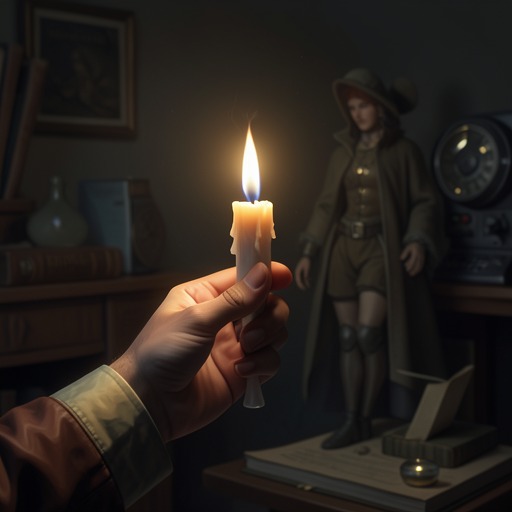
Doctor ZhivagoThe candle by the window links a private moment of danger to Yurii’s emerging poetic imagination. Its light, briefly seen through ice from the street, seems almost to watch and wait; the image gives shape to the unfinished words that will become a poem’s beginning.
A candle lit in Lara’s room
At Lara’s request, Pasha replaces the burned-down stump in the candlestick with a fresh candle, sets it on the windowsill, and lights it after turning off the electricity. The flame first chokes and splutters, throws off small sparks, and then sharpens into an arrow. Its soft light fills the room as a black eyelet begins to form in the ice covering the pane.
The candle is part of an intimate scene, but the intimacy is shadowed by danger. Lara tells Pasha that she is in trouble and constantly at risk, and insists that they must not delay their marriage. Against that urgent confession, the new flame offers a concentrated patch of light, while the eyelet in the ice opens the room’s private space toward the darkness outside.
Seen from the street
Later, as Yurii rides through Kamerger Street, he notices that a candle has melted a patch in the icy crust on a window. The light seems to look consciously into the street, as if watching the passing carriages and waiting for someone. The image turns an ordinary household flame into an apparent presence: the candle is no longer merely a source of light but a point of attention directed outward.
The scene belongs to a Christmas passage in which Yurii has been thinking about the holiday’s echoes in Russian life and literature. The window’s glow gathers that atmosphere into a single image, joining a warm interior to the winter street without explaining who is inside or whom the light awaits.
From image to poem
Yurii whispers, “A candle burned on the table, a candle burned…,” recognizing the beginning of something still confused and formless. He hopes the poem will take shape of itself, but no further words come to him. The candle’s significance therefore lies not in a completed work but in the moment when perception becomes a possible line of poetry.
The image’s recurrence connects Lara’s candlelit room with Yurii’s view from outside, while preserving the difference between the scenes. In the first, the flame accompanies a plea for help and a decision about marriage; in the second, its light becomes a mysterious sign that awakens poetic language. The candle remains materially ordinary, but its place at the window lets light, ice, danger, waiting, and nascent creation meet.